
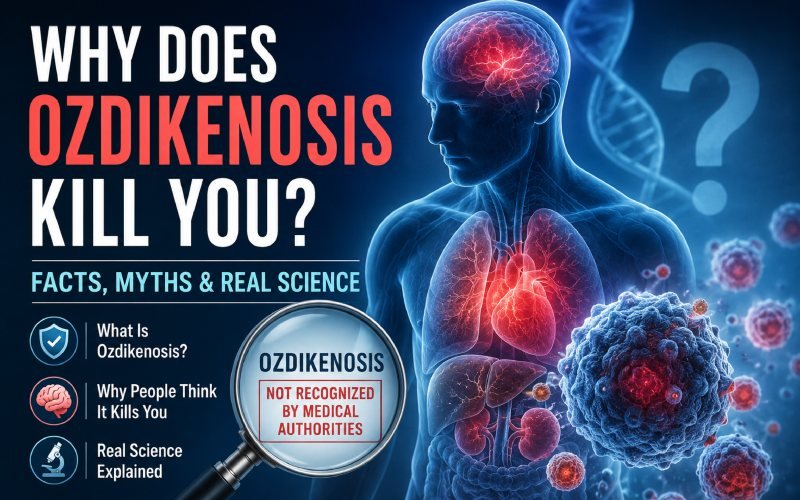
People search “why does ozdikenosis kill you” because the term sounds frightening and medically serious. Many websites describe it as a deadly disease that destroys organs and shuts down the body. The problem? No verified medical organization recognizes ozdikenosis as a real diagnosis. This guide separates internet fiction from actual medical science so you understand what is real, what is speculative, and why the topic spreads online.
What Is Ozdikenosis?
At this time, ozdikenosis does not appear in recognized medical databases or disease registries.
You cannot find it listed in:
Many websites describe ozdikenosis as:
- A neurodegenerative disease
- A mitochondrial disorder
- A systemic inflammatory illness
- A fatal cellular condition
However, these descriptions lack verified scientific evidence.
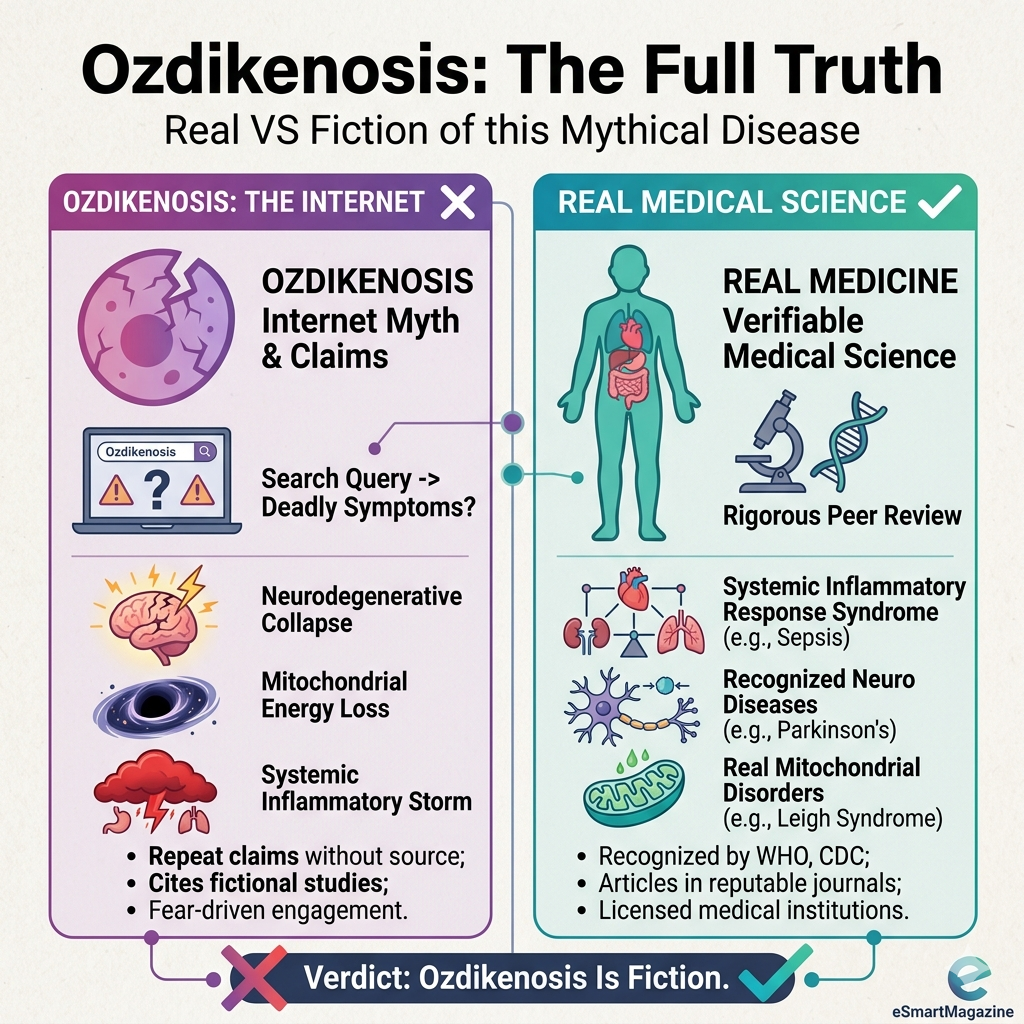
Most articles repeat the same unsupported claims without citing peer-reviewed medical studies. Several pages even reference fictional statistics and unverified medical journals.
That creates confusion for readers who assume the condition must be real because multiple websites discuss it.
Why People Think Ozdikenosis Kills You
The term sounds medically authentic. That alone gives it authority online.
Words ending in “-osis” often describe real medical conditions, so readers naturally assume ozdikenosis belongs to the same category. Once websites begin repeating similar explanations, search engines amplify the topic even further.
Most viral articles claim ozdikenosis kills people through:
- Organ failure
- Oxygen deprivation
- Brain damage
- Nervous system collapse
- Cellular energy failure
These mechanisms sound believable because real diseases can kill in similar ways.
For example:
- Sepsis can trigger widespread inflammation and organ failure.
- Lupus can damage multiple organs.
- Parkinson’s disease affects movement and neurological control.
- Mitochondrial disease disrupts cellular energy production.
Because real illnesses already use these biological pathways, fictional explanations can appear convincing.
How Real Diseases Actually Become Fatal
Even though ozdikenosis lacks scientific recognition, many articles describing it borrow mechanisms from genuine medical conditions.
Here is how real diseases commonly cause death.
Multi-Organ Failure
Many severe illnesses overwhelm several organs at the same time.
The heart, kidneys, lungs, and brain depend on oxygen and stable blood circulation. When one system fails, others quickly follow.
For example:
- Kidney failure allows toxins to build up.
- Lung failure reduces oxygen delivery.
- Heart failure weakens circulation.
- Brain injury disrupts automatic body functions.
Doctors call this process multi-organ dysfunction syndrome.
Oxygen Deprivation
Your cells need constant oxygen to survive.
Conditions involving severe infection, respiratory collapse, or circulatory failure can starve organs of oxygen. Without oxygen:
- Brain cells begin dying within minutes.
- Heart tissue weakens.
- Organs lose function rapidly.
That process explains why diseases involving breathing problems often become life-threatening.
Immune System Overreaction
Some illnesses become deadly because the immune system attacks healthy tissue.
This happens in conditions like:
- Severe autoimmune disorders
- Advanced inflammatory syndromes
- Septic shock
Inflammation damages blood vessels, tissues, and organs. When inflammation spreads uncontrollably, the body begins harming itself faster than it can recover.
Neurological Breakdown
The nervous system controls:
- Breathing
- Heart rhythm
- Muscle movement
- Blood pressure
When neurological damage reaches critical areas of the brainstem, the body can no longer regulate essential survival functions.
That explains why advanced neurodegenerative diseases become fatal over time.
Comparison: Internet Claims vs Verified Science
Why Fake Medical Terms Spread So Fast Online
Internet health trends spread quickly because fear drives clicks.
People search symptoms online when they:
- Feel anxious
- Experience unexplained fatigue
- Read alarming social posts
- See viral TikTok or Reddit discussions
Once a fictional condition gains traction:
- Low-authority websites publish speculative content.
- Other websites copy the same information.
- Search engines detect growing interest.
- More readers assume the condition is real.
This cycle creates false credibility.
The same pattern has happened repeatedly with:
- Fake syndromes
- Viral detox myths
- Unsupported medical conspiracies
- Misleading symptom checklists
How to Evaluate Online Health Information
Before trusting any medical claim, verify these things:
| Question | Why It Matters |
| Does a major medical organization recognize it? | Prevents misinformation |
| Are peer-reviewed studies available? | Confirms scientific support |
| Does the article cite official sources? | Improves credibility |
| Does the content avoid fear tactics? | Reduces manipulation |
| Are statistics verifiable? | Prevents fabricated claims |
Reliable health information usually comes from:
- Government health agencies
- Medical universities
- Peer-reviewed journals
- Licensed healthcare institutions
Final Thoughts
The phrase “why does ozdikenosis kill you” attracts attention because it combines medical language with fear-driven storytelling. Current evidence does not support ozdikenosis as a recognized disease. Most articles discussing it recycle speculative biology without verified scientific backing.
Understanding how real illnesses cause organ failure, inflammation, and neurological decline helps separate medical reality from internet fiction. Always verify health information through credible medical organizations instead of anonymous viral content.
FAQs
Is ozdikenosis a real disease?
No verified medical authority currently recognizes ozdikenosis as an official disease or diagnosis.
Why do websites say ozdikenosis kills people?
Many articles use fictional medical explanations inspired by real diseases involving organ failure, inflammation, or neurological decline.
Can diseases similar to ozdikenosis exist?
Yes. Real conditions involving mitochondrial dysfunction, neurodegeneration, or immune-system damage can become fatal.
Why does the topic trend online?
The term sounds medically believable, and fear-based health content spreads rapidly on social media and search engines.
Where should I verify medical information?
Use trusted sources like:
- WHO Official Website
- CDC Health Information
- PubMed Research Database